Lebanon sits at a latitude where the sun's ultraviolet rays are powerful enough to cause cumulative skin damage every single day of the year — not just in the peak heat of August, but through the grey skies of January and the mild, deceptive days of November. Many women apply sunscreen only when they head to the beach, treating SPF as a seasonal accessory rather than a daily non-negotiable. Yet the science tells a different story entirely. Dermatologists and photobiologists agree: UV radiation penetrates cloud cover, reflects off urban surfaces, and reaches your skin even when temperatures drop. For anyone living in the Levant region, daily broad-spectrum sun protection is one of the single most evidence-backed investments you can make in your long-term skin health. Understanding exactly why — and how to choose a formula that works with your skin rather than against it — changes the way you think about your morning routine forever.
Lebanon's UV Reality: The Numbers You Need to Know
Lebanon occupies a geographic position between approximately 33° and 34° North latitude, placing it firmly within what climatologists call the "high UV belt" of the Mediterranean. The UV Index — the internationally standardized scale measuring the strength of ultraviolet radiation at ground level — regularly reaches 9 or 10 in summer months, a level classified as "very high" to "extreme" by the World Health Organization. What surprises most people is that even during December and January, Lebanon's UV Index frequently sits at 3 to 4, a range already considered "moderate" and sufficient to trigger skin damage with cumulative daily exposure.
UVA rays — the longer-wavelength radiation responsible for premature aging, hyperpigmentation, and deeper DNA damage — maintain roughly 70 to 80 percent of their peak summer intensity throughout the winter months. Unlike UVB rays, which cause sunburn and fluctuate more with season and angle of the sun, UVA radiation is a near-constant presence. It passes through window glass, penetrates car windscreens, and bounces off white-painted building facades, the limestone of old city centres, and even light-coloured pavements — all of which are abundantly present in Lebanese urban environments.
A study published in the Journal of Investigative Dermatology confirmed that chronic sub-erythemal UVA exposure — meaning doses below what causes visible redness — still generates reactive oxygen species (ROS) within the dermis, leading to collagen degradation, elastin fragmentation, and melanocyte stimulation. In plain terms: you don't need to burn to age prematurely. Daily, low-level UV exposure accumulates over years, and Lebanon's geography ensures that exposure is never truly zero.
- Summer UV Index (June–August): 8–11 (Very High to Extreme)
- Spring/Autumn UV Index (March–May, Sep–Nov): 5–8 (High)
- Winter UV Index (Dec–Feb): 3–5 (Moderate)
- UVA penetration through clouds: up to 80% of clear-sky levels
- UVA penetration through standard glass: near 100%
What UV Radiation Actually Does to Skin — The Science Explained
To appreciate why daily SPF matters, it helps to understand what is physically happening inside your skin every time unprotected UV light reaches its surface. Ultraviolet radiation is divided into three bands: UVC (completely blocked by the ozone layer), UVB (medium wavelength, causes sunburn, stimulates vitamin D synthesis), and UVA (long wavelength, the aging ray). Both UVA and UVB reach the skin and both contribute to carcinogenesis and photoaging through distinct but overlapping mechanisms.
UVB radiation is absorbed primarily in the epidermis, where it directly damages DNA by creating pyrimidine dimers — structural distortions in the DNA strand that, if not properly repaired by the body's nucleotide excision repair system, can lead to mutations in keratinocytes. These mutations are the upstream driver of squamous cell carcinoma and basal cell carcinoma, the two most common skin cancers globally. In populations with lighter Fitzpatrick skin tones — types II and III, common among many Lebanese women — UVB-related DNA damage accumulates significantly faster.
UVA radiation penetrates deeper, reaching the dermis where fibroblasts produce collagen and elastin. Once UVA photons are absorbed by chromophores in the skin, they trigger the generation of reactive oxygen species that oxidise lipids and proteins, fragment collagen fibrils, and stimulate matrix metalloproteinases (MMPs) — enzymes that break down the structural scaffolding of the skin. The visible consequences are the ones many women notice from their mid-thirties onward: fine lines forming around the eyes, a gradual loss of elasticity along the jawline, and uneven pigmentation or melasma, which is notably more prevalent in populations with Mediterranean and Middle Eastern skin tones.
"Chronic low-dose UVA exposure induces persistent oxidative stress and mitochondrial DNA mutations in dermal fibroblasts, contributing to intrinsic-appearing photoaging even in the absence of acute sunburn episodes."
— Schuch, A.P. et al., Mutagenesis, Oxford University Press (2017). DOI: 10.1093/mutage/gew072
There is also the matter of hyperpigmentation — arguably the number-one skin concern reported by women across the Middle East and Mediterranean. Melanocytes respond to UV stimulation by producing melanin as a photoprotective response. In skin phototypes III through V, this response is often exaggerated and uneven, resulting in post-inflammatory hyperpigmentation, melasma, and sunspots that can take months or years to fade. Daily SPF interrupts this cycle at the source, making it the most effective and evidence-supported tool in any pigmentation-management routine.
Why "I'll Use It in Summer" Is Not Enough
The seasonal SPF myth persists even among educated, health-conscious women, partly because the sensory cues we associate with sun damage — heat, bright light, sunburn — are absent in the cooler months. But the biology is indifferent to how the weather feels. Cloud cover reduces UVB by roughly 20 to 30 percent on heavily overcast days but has a much more modest effect on UVA, which passes through water vapour and particulate matter in the atmosphere with relative ease.
Consider a typical winter day in Beirut or the Bekaa Valley: temperatures around 12°C, overcast sky, a light breeze. You walk to your car, run errands, sit near a window at work or at a café — accumulating perhaps 45 to 60 minutes of incidental UV exposure. Individually, each of these moments feels inconsequential. Cumulatively, over 365 days a year, over decades of life, this incidental exposure is responsible for the majority of visible photoaging. Research published in the Annals of Internal Medicine found that individuals who applied broad-spectrum SPF 15 daily over 4.5 years showed measurably less skin aging compared to a control group using SPF discretionarily — and this was in an Australian population, where sun awareness is already higher than in most of the Middle East.
There is also a particular concern for women who drive regularly. The left side of the face — the driver's side — consistently shows more photoaging than the right in populations where cars are left-hand drive, a pattern well-documented in dermatological literature. Lebanese roads and the region's car culture mean many women accumulate significant UVA exposure through their windscreen and side windows during daily commutes, entirely unaware that standard glass provides zero UVA protection.
- Office windows block UVB but transmit up to 75% of UVA
- Car side windows (non-tinted) transmit approximately 70% of UVA
- A 15-minute walk in winter at midday still delivers a meaningful UV dose
- High-altitude areas (Faraya, the Cedars) receive significantly higher UV due to thinner atmosphere
- Reflective surfaces — snow, water, sand — can increase effective UV exposure by 20–80%
💡 Pro Tip
Apply your SPF as the final step of your morning skincare routine, after moisturiser and before any makeup. Give it 2–3 minutes to settle before applying foundation. If you spend significant time outdoors, reapply every 2 hours — even on cool or cloudy days. A pea-sized amount spread evenly across face, neck, and the backs of your hands covers the areas most commonly exposed during a typical day. Do not forget your ears and the part line in your hair if it is exposed to direct sun.
Choosing the Right SPF: What the Labels Actually Mean
Navigating sunscreen labels requires a working vocabulary. The SPF number — Sun Protection Factor — measures exclusively UVB protection. An SPF 30 product blocks approximately 97 percent of UVB rays; SPF 50 blocks roughly 98 percent. The jump from 30 to 50 is marginal in absolute terms, but the difference between SPF 15 and SPF 30 is more meaningful, particularly under Lebanon's higher UV conditions. Dermatologists broadly recommend a minimum of SPF 30 for daily urban use and SPF 50 for prolonged outdoor exposure.
What the SPF number does not tell you is how well the product protects against UVA. For that, you need to look for the term "broad-spectrum" on the label, which under regulatory frameworks used in Europe and internationally means the product has passed standardised tests (such as the ISO 24443 standard) confirming its UVA protection reaches at least one-third of its UVB SPF value. Some markets use a "PA" rating system (PA+, PA++, PA+++, PA++++), common in Japanese and Korean formulations, where PA++++ indicates the highest UVA protection tier. For the purposes of daily use in the Levant, a broad-spectrum SPF 30 or higher with a PA+++ or PA++++ rating represents an excellent standard.
Beyond the numbers, the formulation itself matters enormously for real-world efficacy. A sunscreen that sits heavily on the skin, leaves a white cast, or breaks down makeup is one that will be applied inconsistently or not at all — and a sunscreen that is never worn has an effective SPF of zero. This is where the choice of ingredients becomes relevant. Sunscreen filters broadly fall into two categories: chemical (or organic) filters, which absorb UV energy and dissipate it as heat, and mineral (or inorganic) filters — primarily zinc oxide and titanium dioxide — which sit on the skin's surface and reflect or scatter UV radiation before it enters the skin.
- Zinc oxide: Broad-spectrum UVA/UVB coverage, photostable, gentle on sensitive skin, the most clinically studied mineral filter
- Titanium dioxide: Primarily UVB and short-wave UVA coverage, very photostable, less white cast than zinc at nano particle sizes
- Avobenzone (Butyl Methoxydibenzoylmethane): The gold-standard chemical UVA filter, requires stabilisers (e.g. octocrylene or bemotrizinol) to remain photostable
- Tinosorb S & Tinosorb M: Next-generation broad-spectrum filters widely used in European formulations, excellent photostability
- Bisoctrizole (Uvinul A Plus): Dual UVA/UVB coverage, highly photostable, increasingly used in premium natural-leaning formulas
For women with Mediterranean or olive skin tones prone to hyperpigmentation, dermatologists increasingly recommend iron oxide-containing sunscreens. Research published in the Journal of the American Academy of Dermatology demonstrated that sunscreens containing iron oxides provide added protection against visible light — particularly high-energy visible (HEV) light — which independently stimulates melanogenesis in darker skin phototypes. This is a particularly relevant consideration for melasma management in the region.
Natural and Clean Formulations: Do They Work as Well?
Growing awareness of ingredient safety, environmental impact, and skin microbiome health has driven significant demand for natural or "clean" sunscreen formulations — products that rely on mineral filters rather than synthetic chemical UV absorbers, and that exclude common irritants such as oxybenzone, octinoxate, homosalate, and certain preservatives. The question many women ask is whether these naturally derived formulations deliver comparable protection to conventional sunscreens.
The short answer, grounded in current evidence, is: yes — provided the formulation is well-engineered. Zinc oxide, when used at concentrations between 15 and 25 percent and formulated with appropriate dispersing agents to minimise aggregation, delivers robust broad-spectrum protection that matches or in some measures exceeds many chemical-filter alternatives. A systematic review published in the International Journal of Cosmetic Science confirmed that micronised zinc oxide formulations achieve SPF values comparable to conventional chemical-filter sunscreens, with superior photostability and a lower incidence of contact sensitisation.
There are real benefits to mineral-only and plant-forward formulations beyond UV filtration. Antioxidant-rich botanical ingredients — including green tea polyphenols (EGCG), vitamin E (tocopherol), vitamin C (ascorbic acid), rosehip oil, and sea buckthorn extract — have demonstrated capacity to quench reactive oxygen species generated by residual UV that passes the physical filter layer. This means a well-formulated natural sunscreen can provide a meaningful secondary layer of photoprotection through antioxidant activity, complementing the primary SPF filter rather than replacing it.
Additionally, the absence of oxybenzone and octinoxate in mineral formulations is relevant for environmental reasons: these chemical filters have been associated with coral reef bleaching at ecologically concerning concentrations, and several coastal jurisdictions have moved toward restricting their use. For women who swim in the Mediterranean, particularly near Lebanon's coastal marine ecosystems, choosing a reef-conscious mineral formula is a meaningful choice.
- Zinc oxide provides UVA 1, UVA 2, and UVB coverage in a single ingredient
- Mineral filters are generally better tolerated by rosacea-prone and sensitive skin types
- Modern micronised zinc formulas have largely eliminated the traditional white cast concern
- Antioxidant co-ingredients enhance photoprotection beyond the stated SPF number
- Non-nano zinc oxide (particle size above 100nm) is generally considered the safest profile for daily use
Building SPF Into a Real-Life Routine: Practical Guidance
Knowing the science of photoprotection is one thing; integrating SPF into a daily routine in a way that is realistic, comfortable, and sustainable is quite another. The most common barriers women report are: texture (too heavy, too greasy), white cast, incompatibility with makeup, and the inconvenience of reapplication. A thoughtful approach to each of these barriers can make daily SPF compliance genuinely effortless.
The most important principle is layering order. Sunscreen — whether mineral or chemical — should be applied as the final skincare step, after any serums and moisturiser. Chemical filters need direct contact with the skin to absorb UV efficiently; mineral filters form a protective layer on top that should not be diluted by being applied under thick emollients. Apply approximately 1/4 teaspoon (about 1.5ml) to the face and neck — this is the dose at which published SPF values are actually achieved. Most people apply far less than this, which can reduce effective protection by 50 percent or more.
For reapplication over makeup, pressed SPF powders or SPF setting mists provide a practical solution for midday top-ups without disturbing a finished look. These products typically deliver lighter coverage than a full morning application but meaningfully extend protection through the afternoon hours. On days involving outdoor dining, beach visits, or extended time on terraces — all culturally central to Lebanese daily life — a dedicated water-resistant SPF 50 is the appropriate choice, with reapplication every two hours or immediately after towelling dry.
- Cleanse face and complete your full serum/moisturiser routine
- Allow the final moisturiser layer to absorb for 1–2 minutes
- Apply a generous, even layer of SPF 30 or higher across face, neck, and décolletage
- Blend using gentle pressing motions rather than rubbing, to avoid disrupting underlying layers
- Wait 2–3 minutes before applying primer or foundation
- Reapply at midday if spending time outdoors — use an SPF mist or powder for convenience over makeup
- Apply a dedicated SPF 50 before any beach, pool, or mountain activity, and reapply every 2 hours
A brief word on SPF in makeup products: tinted moisturisers, BB creams, and foundations frequently list an SPF value on their packaging. While these products do provide some additional protection, the quantities typically applied are not sufficient to achieve the stated SPF, and coverage is often uneven. They should be considered a supplementary bonus rather than a substitute for a dedicated sunscreen layer applied first.
Finally, it is worth addressing a question that comes up repeatedly in skincare conversations: does daily SPF use interfere with vitamin D synthesis? The short answer, based on current evidence, is: not meaningfully in real-world conditions. Studies — including research published in JAMA Dermatology — have found that consistent sunscreen users do not show significantly lower vitamin D levels than non-users, largely because incidental unprotected UV exposure (forearms, legs, brief outdoor moments without sunscreen) is sufficient to maintain serum 25-hydroxyvitamin D. Dietary sources and supplementation remain the recommended approach for anyone with confirmed vitamin D deficiency, rather than avoiding SPF.
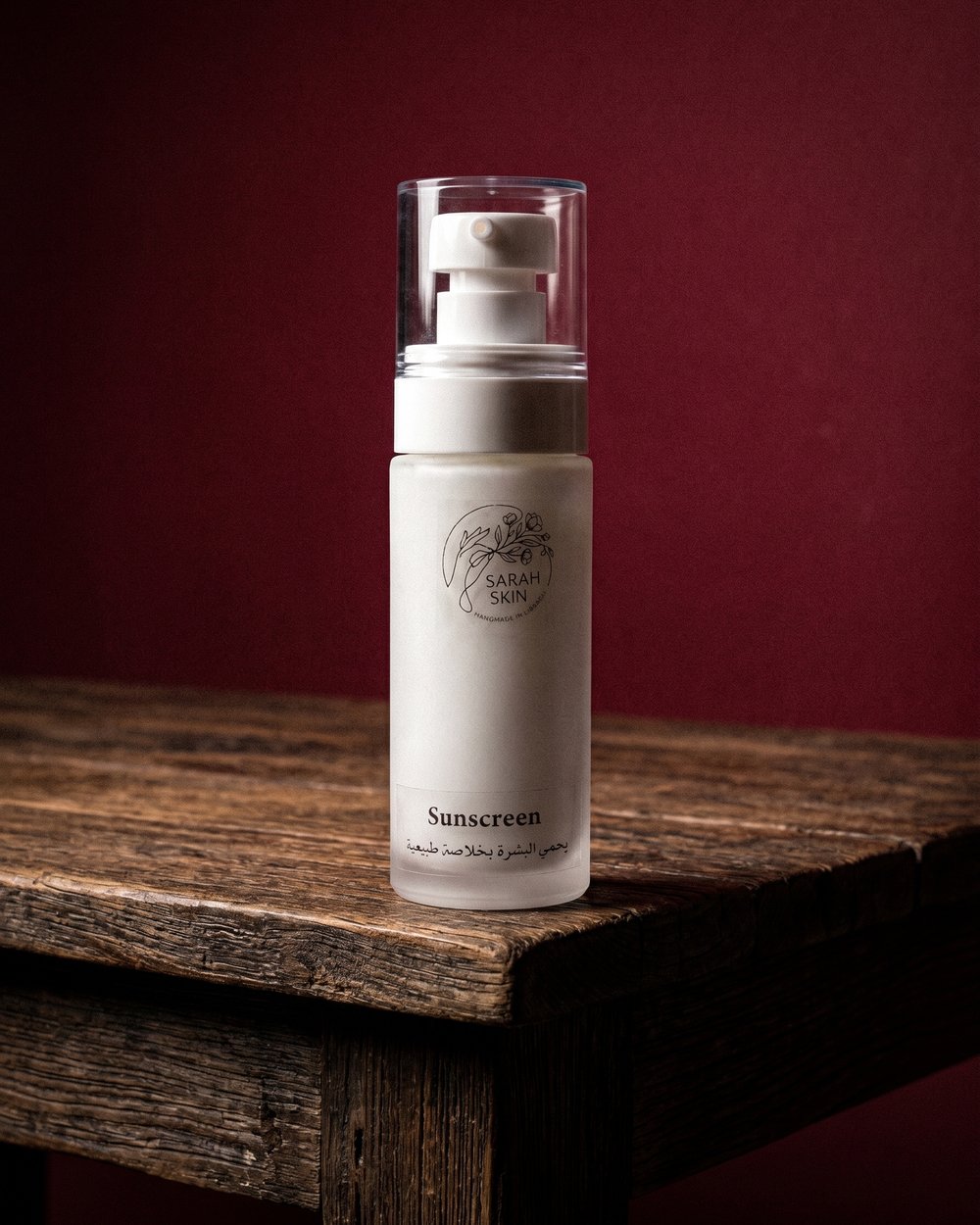
Your skin carries every hour of sun exposure it has ever received. The good news is that the damage accumulating today is the damage you can still prevent. Sarah Skin's natural Sunscreen 60ml is formulated to make daily broad-spectrum protection something you genuinely look forward to — a lightweight, botanically enriched formula that sits comfortably under makeup, respects the skin barrier, and delivers the mineral-based protection your skin deserves every morning of every season. Make it the last step of your morning routine, every day, without exception. Your skin in ten years will reflect exactly this choice.
Scientific References:
1. Schuch, A.P., Moreno, N.C., Schuch, N.J., Menck, C.F.M., & Garcia, C.C.M. (2017). Sunlight damage to cellular DNA: Focus on oxidatively generated lesions. Free Radical Biology and Medicine, 107, 110–124. DOI: 10.1016/j.freeradbiomed.2017.01.029
2. Hughes, M.C.B., Williams, G.M., Baker, P., & Green, A.C. (2013). Sunscreen and prevention of skin aging: A randomized trial. Annals of Internal Medicine, 158(11), 781–790. DOI: 10.7326/0003-4819-158-11-201306040-00002
3. Mancebo, S.E., Hu, J.Y., & Wang, S.Q. (2014). Sunscreens: A review of health benefits, regulations, and controversies. Dermatologic Clinics, 32(3), 427–438. DOI: 10.1016/j.det.2014.03.011