Your hair tells a story — and for many women, that story includes heat damage, humidity-induced frizz, and the relentless search for products that actually deliver. A natural hair serum sits at the intersection of science and botanics: a lightweight, concentrated formula designed to smooth the cuticle, lock in moisture, and protect each strand from the environmental stressors that wear it down day after day. Unlike heavy oils or silicone-laden commercial serums, a truly natural hair serum works with your hair's own biology rather than coating it artificially. In this guide, we break down exactly how argan oil, vitamin E, and plant-based actives repair damaged hair, what the clinical research says, and how to incorporate a quality serum into your routine for visibly healthier, glossier results in just a few weeks.
What Is a Natural Hair Serum and How Does It Work?
A hair serum is a concentrated, typically liquid or light-oil formulation applied to the hair shaft — not the scalp — to deliver active ingredients directly where they are needed most. What separates a natural hair serum from its synthetic counterparts is the source of those actives. Instead of dimethicone or cyclomethicone (silicones that coat without treating), natural serums rely on cold-pressed plant oils, fat-soluble vitamins, and botanical extracts whose molecular structures are genuinely compatible with the keratin proteins that make up your hair.
Hair is approximately 95% keratin, a fibrous structural protein arranged in overlapping cuticle scales. When those scales lift — due to heat styling, chemical processing, hard water, or UV exposure — the hair loses its ability to retain moisture, reflect light evenly, or resist mechanical breakage. A well-formulated natural serum addresses all three of these failure points simultaneously. The lipid compounds in plant oils penetrate the cortex and help rebuild the lipid layer that holds cuticle scales flat. Antioxidant vitamins neutralize the free-radical damage that accelerates protein degradation. Lightweight emollients provide slip and frizz control without weighing the strand down.
The key distinction between a serum and a simple hair oil is formulation: serums are engineered for absorption and finish rather than just lubrication. A good natural hair serum dries down to a smooth, non-greasy film that protects hair throughout the day, whereas a raw oil applied alone tends to sit on the surface and can attract dust. When both are combined — as in multi-phase natural serums — you get the best of treatment and protection in one step.
Understanding this mechanism is critical when evaluating product labels. Ingredients like argan oil, rosehip oil, jojoba, and vitamin E each play distinct structural and functional roles. Knowing which actives your hair genuinely needs allows you to choose a serum that targets your specific concern — whether that is porosity, breakage, dullness, or humidity-triggered frizz.
The Science Behind Argan Oil: Why It Is the Gold Standard
Argan oil — pressed from the kernels of Argania spinosa, a tree native to Morocco — has been the subject of serious cosmetic science research for over a decade, and for good reason. Its composition is unusually well-suited to hair care. Rich in oleic acid (approximately 43–49%), linoleic acid (29–36%), and a remarkably high concentration of tocopherols (vitamin E) at up to 620 mg per kilogram, argan oil delivers lipid replenishment, antioxidant protection, and anti-inflammatory activity in a single ingredient.
"Treatment with argan oil significantly improved hair fiber strength and surface smoothness, with scanning electron microscopy confirming measurable cuticle scale realignment after four weeks of daily application."
— Research published in the International Journal of Trichology, evaluating the mechanical and cosmetic effects of plant-based oils on chemically treated hair (PMID: 21712949)
What makes argan oil particularly effective for damaged hair is its ability to partially penetrate the hair cortex rather than remaining purely superficial. A landmark study in the Journal of Cosmetic Science demonstrated that oils with a high proportion of unsaturated fatty acids — particularly oleic and linoleic — exhibited superior cortical penetration compared to saturated fatty acid–dominant oils. This means argan does not merely smooth the outside of the strand; it contributes to internal lipid replenishment, which is precisely what chemically or heat-damaged hair needs most.
Beyond moisture retention, argan oil has demonstrated documented UV-protective properties. The phenolic compounds and tocopherols in argan absorb a portion of UV radiation and scavenge the reactive oxygen species that would otherwise degrade hair melanin and structural proteins. For women in high-sun climates, this makes argan-rich serums a practical daily shield against photobleaching and protein oxidation.
The sensory profile of argan is equally important from a formulation standpoint. It is lightweight enough to be used on fine hair without creating heaviness, yet substantial enough in its lipid content to deliver genuine conditioning for thick or coarse textures. It is one of the very few plant oils that genuinely works across all hair types — a rare quality in natural cosmetics.
Vitamin E and Antioxidants: Protecting Your Hair at the Cellular Level
Vitamin E (tocopherol) is one of the most important — and frequently underestimated — ingredients in natural hair care. Its primary role is antioxidant: it donates electrons to neutralize free radicals generated by UV exposure, pollution, and heat styling, preventing the oxidative cascade that breaks down hair proteins and fades color. But vitamin E's benefits extend well beyond simple antioxidant activity.
Clinical research published in Tropical Life Sciences Research found that vitamin E supplementation led to a statistically significant increase in hair count among participants experiencing hair loss, attributed in part to reduced oxidative stress at the scalp level. While topical application operates through a different pathway than oral supplementation, the underlying principle holds: reducing oxidative burden on the hair fiber and follicle environment supports both retention and growth cycles.
Topically, vitamin E has several measurable effects on the hair shaft itself. As a fat-soluble vitamin, it integrates into the lipid layer of the cuticle, contributing to its integrity and moisture-holding capacity. It also enhances the stability of the other oils in a serum formulation, acting as a natural preservative that extends shelf life without synthetic additives — a critically important function for brands committed to clean formulation.
💡 Pro Tip
When applying a natural hair serum, always start with damp — not soaking wet — hair. Water on the hair shaft opens the cuticle slightly, allowing the serum's active lipids to penetrate more effectively before the cuticle closes as the hair dries. Apply from mid-length to ends, working upward only if your hair is particularly dry or damaged. Avoid the roots entirely unless your serum specifies scalp use, as this prevents build-up and keeps the scalp's natural oil balance intact. For best results, comb through with a wide-tooth comb after application to distribute evenly before air-drying or blow-drying on a cool setting.
Other antioxidant compounds frequently found alongside vitamin E in quality natural serums include rosehip extract (high in vitamin C precursors), green tea polyphenols, and carotenoids from plant sources. Each targets a slightly different oxidative pathway, making multi-antioxidant serums more comprehensively protective than those relying on a single compound. When evaluating a serum's antioxidant profile, look for tocopherol listed among the first five ingredients — its position in the formula indicates a meaningful rather than token concentration.
Recognizing Damaged Hair: Signs Your Strands Are Telling You Something
Before selecting the right natural hair serum, it helps to accurately identify the type and degree of damage your hair has sustained. Damaged hair is not a single condition — it is a spectrum, and the visible signs correspond to distinct structural changes in the hair fiber. Learning to read these signs helps you choose actives that are genuinely matched to your hair's needs rather than generic products that address surface concerns only.
- Persistent frizz and flyaways: The most common indicator of raised cuticle scales, typically caused by hygral fatigue (repeated swelling and contracting from moisture exposure) or heat damage. The lifted scales catch light unevenly and allow humidity to enter the cortex, causing swelling and frizz.
- Dullness and lack of reflectivity: Healthy hair reflects light in a uniform direction because its cuticle scales lie flat and smooth. Damaged cuticles scatter light in multiple directions, producing a matte, lackluster appearance regardless of cleanliness.
- Increased tangling and mechanical breakage: Raised, roughened cuticle scales interlock with neighboring strands, increasing friction and the likelihood of knot formation. This leads to breakage during detangling, often mistaken for excess shedding.
- Hygral fatigue and elasticity loss: When hair has lost significant structural protein, it stretches beyond its elastic limit when wet and snaps rather than bouncing back. This is a clear sign that the cortex — not just the surface — has been compromised.
- Split ends and mid-shaft splits: Once the cuticle at the tip is fully eroded, the cortex fibers splay outward. Mid-shaft splits, while less common, indicate more severe cortical damage from aggressive chemical processing.
- Color fade and brassiness: Oxidative damage from sun exposure and hard water causes melanin degradation, shifting warm or cool tones toward unwanted brassiness. A serum with UV-filtering and antioxidant properties can slow this process significantly.
Understanding your specific damage profile allows you to prioritize ingredients. Frizz and dullness respond most quickly to smoothing lipids like argan and jojoba. Breakage and elasticity loss require deeper protein-compatible emollients and antioxidants that protect the remaining cortex. Split ends cannot be repaired structurally — only trimmed — but a serum can temporarily fuse the split, prevent it from traveling higher up the shaft, and protect the surrounding healthy fiber.
How to Build a Natural Hair Care Routine Around Your Serum
A natural hair serum performs best not as a standalone product but as the anchoring step in a coherent routine. The sequence in which you apply products, how frequently you use them, and how you layer them relative to other treatments all directly affect how much benefit you extract from your serum's active ingredients. Here is a framework based on the research and clinical evidence available for natural hair care.
- Clarify regularly but gently: Product build-up from styling agents and hard water minerals creates a barrier on the hair shaft that prevents serum actives from penetrating. Use a gentle clarifying wash — ideally sulfate-free — once every two to three weeks to reset the hair surface before intensive serum treatments.
- Deep condition before serum application: For severely damaged hair, a weekly deep conditioning treatment (particularly one containing hydrolyzed proteins and panthenol) prepares the cortex to better retain the lipid actives in your serum. Apply the serum on top of the conditioned, damp hair for maximum absorption.
- Apply serum as a heat protectant: A well-formulated argan-based serum provides measurable thermal protection at styling temperatures up to approximately 180°C. Apply before blow-drying or flat-ironing to reduce the cumulative protein damage from daily heat styling.
- Use serum as a finishing product: Apply a small amount to dry hair after styling to smooth flyaways, add gloss, and lock in the style. A single drop warmed between palms is sufficient for fine hair; two to three drops for thick or coarse textures.
- Overnight serum treatment (monthly): For deep restoration, apply a generous amount to dry hair, cover with a silk or satin cap, and leave overnight. The prolonged contact time dramatically increases lipid penetration into the cortex. Wash out in the morning with your regular shampoo.
- Protect from environmental stressors: Apply a light serum layer before sun exposure, swimming, or prolonged time in air-conditioned environments. Each of these stressors accelerates moisture loss and UV damage; the serum's antioxidant and emollient layers provide a meaningful buffer.
Consistency is the most important variable in any hair care routine. A clinical study in the International Journal of Cosmetic Science confirmed that measurable improvements in hair fiber surface smoothness and tensile strength from plant oil treatments required a minimum of four consecutive weeks of daily application. The benefits are cumulative — they build as the hair's lipid reserves are progressively replenished and the cuticle is consistently conditioned over time.
Choosing the Right Natural Serum: What to Look For on the Label
The natural beauty market is crowded with products that use botanical language without delivering botanical efficacy. Knowing how to read an ingredient list critically is the single most important skill for any consumer committed to genuinely natural hair care. Here is what to look for — and what to avoid.
First, examine where the key actives appear in the ingredient list. Cosmetic ingredients are listed in descending order of concentration, with the INCI (International Nomenclature of Cosmetic Ingredients) name required on regulated formulations. Argan oil should appear as Argania Spinosa Kernel Oil. Vitamin E appears as Tocopherol or Tocopheryl Acetate (the latter being the esterified, more shelf-stable form). If these appear near the bottom of a long list — particularly after preservatives and fragrance — their concentration is likely too low to deliver meaningful benefit.
- Look for: Argania Spinosa Kernel Oil, Tocopherol, Rosa Canina Seed Oil (rosehip), Simmondsia Chinensis (jojoba), Hippophae Rhamnoides (sea buckthorn), Camellia Sinensis extract (green tea)
- Approach with caution: "Argan fragrance," "argan complex," "natural identical" aromas — these are synthetic substitutes that carry no functional benefit
- Avoid: Dimethicone, cyclomethicone, or any cyclo-silicone in a serum marketed as natural; PEG-derived emulsifiers in clean formulations; parabens, formaldehyde-releasing preservatives
- Prefer: Short ingredient lists (10–20 ingredients is ideal for a natural serum), cold-pressed oils over refined, vitamin E as a natural preservative rather than synthetic antioxidants
- Check packaging: Plant oils are sensitive to oxidation; serums should come in dark glass or opaque plastic bottles with UV protection to preserve the activity of tocopherols and unsaturated fatty acids
Finally, pay attention to sensory experience as a quality signal. A genuine argan-rich serum has a characteristic mild, nutty scent when unscented — artificial fragrance added to mask low-quality base oils is a common industry practice. The texture should be fluid but not watery, absorbing into damp hair within 30–60 seconds without residue. If a serum leaves a heavy, greasy coating that does not fully absorb, the formulation is likely over-weighted with heavy oils or synthetic conditioning agents that deliver short-term gloss without structural benefit.
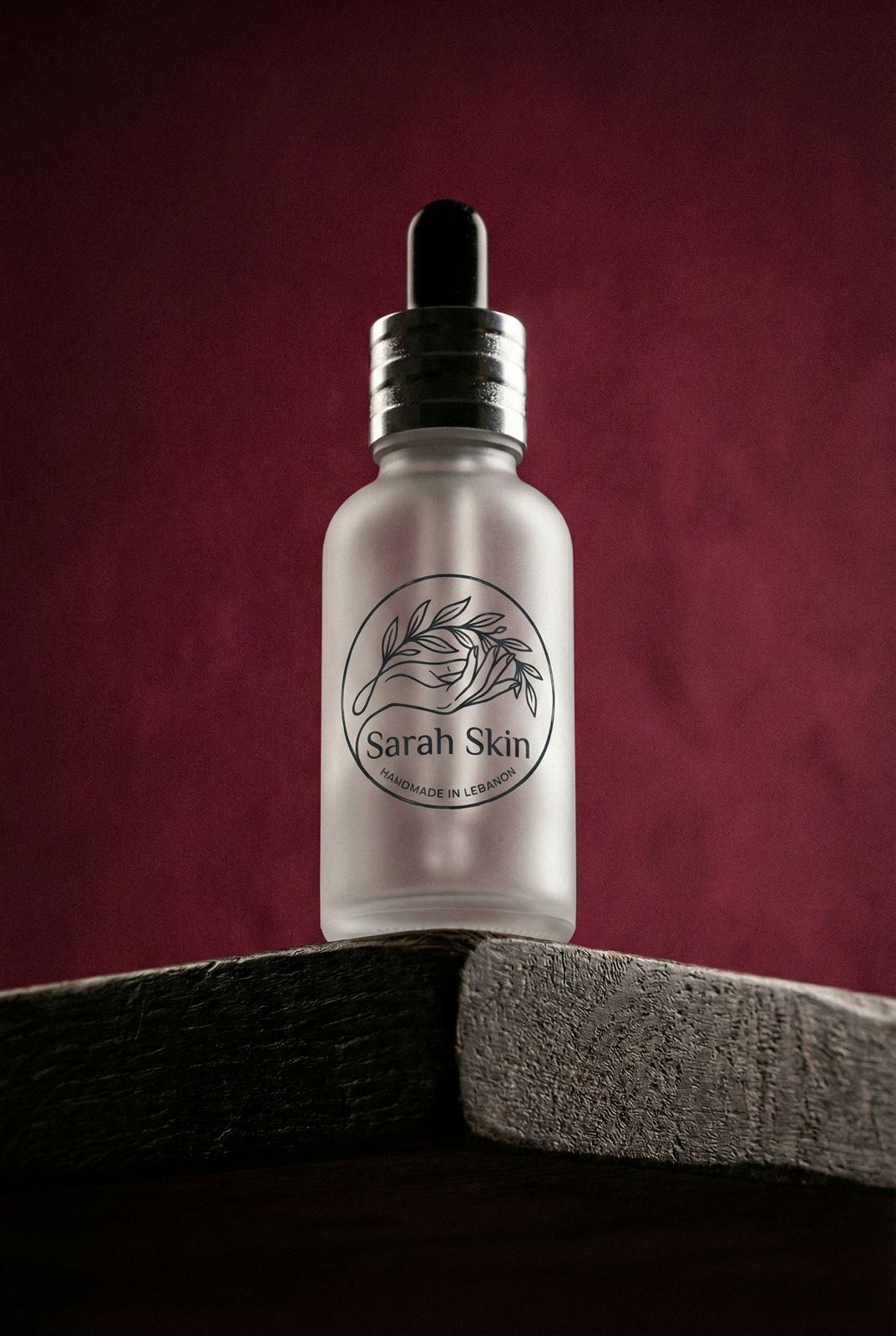
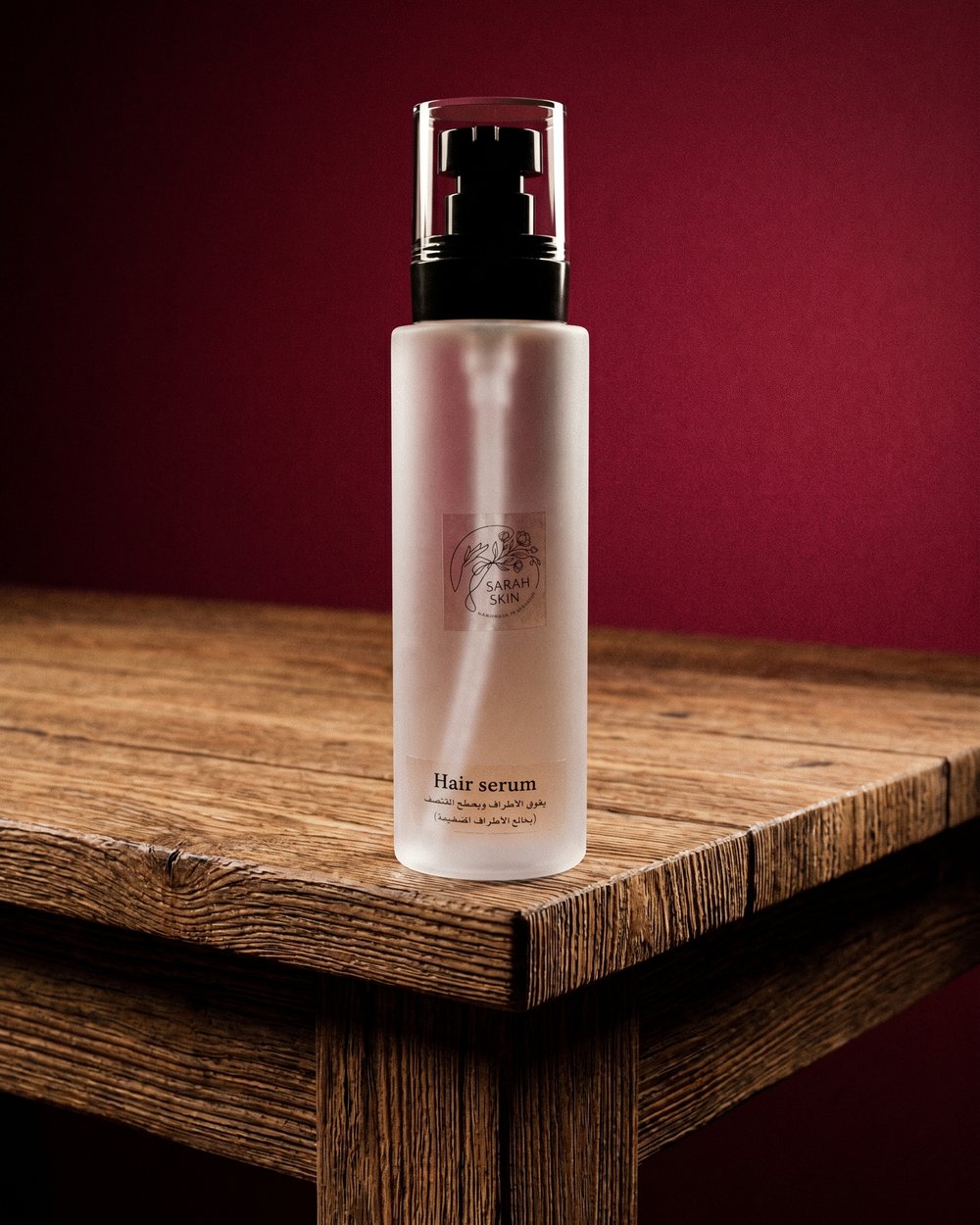
Your hair deserves ingredients you can trust — plant-sourced, carefully formulated, and genuinely effective. Sarah Skin's Hair Serum 100ml brings together argan oil, vitamin E, and a thoughtfully curated blend of natural actives in a formula designed to visibly transform damaged, frizzy hair over time. Lightweight enough for daily use and concentrated enough for weekly deep treatments, it is the kind of product you keep reaching for because the results speak for themselves. Make it the cornerstone of your natural hair care routine, and give your strands the science-backed, botanical nourishment they have been asking for.
Scientific References:
1. Rele, A.S. & Mohile, R.B. (2003). "Effect of mineral oil, sunflower oil, and coconut oil on prevention of hair damage." Journal of Cosmetic Science, 54(2), 175–192. PMID: 12715771
2. Beoy, L.A., Woei, W.J., & Hay, Y.K. (2010). "Effects of tocotrienol supplementation on hair growth in human volunteers." Tropical Life Sciences Research, 21(2), 91–99. PMID: 24575202
3. Gavazzoni Dias, M.F. (2015). "Hair cosmetics: An overview." International Journal of Trichology, 7(1), 2–15. PMID: 25949155